

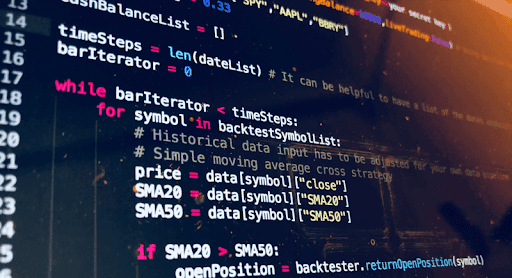
Introduction to Quantitative Trading: Using Data to Drive Investment Decisions
In the fast-changing financial markets, how to make efficient and rational investment decisions has always been the goal pursued by every investor. Quantitative Trading (Quantitat…
In the fast-changing financial markets, how to make efficient and rational investment decisions has always been the goal pursued by every investor.Quantitative Trading(Quantitative Trading) gradually emerged in this context. It uses mathematical models, data analysis, and algorithmic strategies to make trading more scientific and automated.
What Is Quantitative Trading?
Quantitative trading is a method of trading that uses mathematical models and computer programs to make investment decisions. Unlike traditional trading methods that rely on subjective judgment, quantitative trading builds strategies using historical data, statistical methods, and technical indicators, and uses algorithms to execute trades automatically.
In short, quantitative trading is:Data + Model + Algorithm = Automated Trading.
Core Components of Quantitative Trading
- Data Collection and Cleaning
Data is the foundation of quantitative trading. This includes market data, such as stock, futures, and foreign exchange prices; financial statement data; macroeconomic data; and even unstructured data such as news sentiment and public opinion on social media. - Strategy Development and Backtesting
When developing a strategy, traders set clear rules, such as “buy when moving averages cross” and “enter a position when the ADX indicator rises.” They then use historical data to perform abacktest(Backtest) to evaluate whether the strategy was effective in the past. - Risk Management and Capital Control
A good strategy should not only be profitable but also control risk. For example, traders can set a maximum drawdown, stop-loss ratio, position size, and more. - Live Trading and Monitoring
Deploy the strategy to the trading system to automatically receive market data, place orders, and manage positions. During live trading, real-time monitoring of market fluctuations and system stability is also required.
Advantages of Quantitative Trading
- Highly Objective: Reduces emotional interference and strictly follows trading rules.
- High Efficiency: Programs can place orders in milliseconds, capturing fleeting arbitrage opportunities.
- Scalability: Strategies can run simultaneously across multiple markets and assets.
- Backtesting and Validation: Before investing real money, strategy performance can be evaluated using historical data.
Common Tools and Languages for Quantitative Trading
- Programming Languages: Python (most commonly used), C++, R, Java
- Platforms/Libraries: Pandas, NumPy, TA-Lib, Backtrader, QuantConnect, Zipline
- Data Sources: Exchange data, third-party APIs (such asAllTick API)
Who Is Suited to Learn Quantitative Trading?
- Individual investors interested in mathematics and programming
- Professional traders looking to improve trading efficiency
- Developers and data analysts in the fintech sector
Conclusion
With the development of artificial intelligence and big data technologies, quantitative trading is becoming an important trend in financial markets. It is no longer an exclusive tool of large Wall Street hedge funds, but a powerful tool that more and more ordinary investors can access and learn.
If you are interested in finance, data analysis, or programming, why not explore the world of quantitative trading—using logic and code to make market uncertainty more predictable.