Services affected by the Asia data center node outage are now stable. To honor our commitment, we are offering a seven-day plan extension. Contact our official online support to claim it.
Learn how to use a financial market data API to retrieve real-time stock quotes, historical K-lines, and multi-symbol data with REST, and when to add WebSocket for continuous market updates.
A
By AllTick
· 5 min read
Market-DataTick-DataHong Kong Stocks real-time market data
Learn how to integrate a real-time Hong Kong stock market data API using AllTick REST and WebSocket interfaces, with Python examples, order-book subscriptions, heartbeat handling, and production integration tips.
Learn how to calculate the KDJ indicator using real-time FX data, build 5-minute EUR/USD candles, generate trading signals, and validate quantitative strategies through reliable backtesting.
Learn what tick trading is, how to calculate tick size and tick value, and how to account for trading costs and market data requirements when building and backtesting quantitative trading strategies.
Compare AllTick plans by product limits, API request rates, WebSocket connections, and historical K-line coverage to find the right fit for your market data application.
Learn how to handle missing gold price API data, fix timestamp discrepancies, normalize UTC timestamps, and recover historical data using REST and WebSocket.
A
By AllTick
· 5 min read
BlogMarket-DataTick-Datastock api real-time market datafinancial data api
Learn how to design a real-time stock API architecture using WebSocket subscriptions, Redis caching, stale-update protection, and separate storage paths for live quotes and historical market data.
Learn how to detect missing forex tick data, resolve timestamp inconsistencies, and validate market data before using it in quantitative trading strategies and backtesting.
A
By AllTick
· 5 min read
Market-DataTick-Datastock api Market DataOHLC Data
Learn what Open, High, Low, and Close mean in stock API data, how OHLC candlesticks work, and how to validate prices, timestamps, and historical data for reliable stock charts.
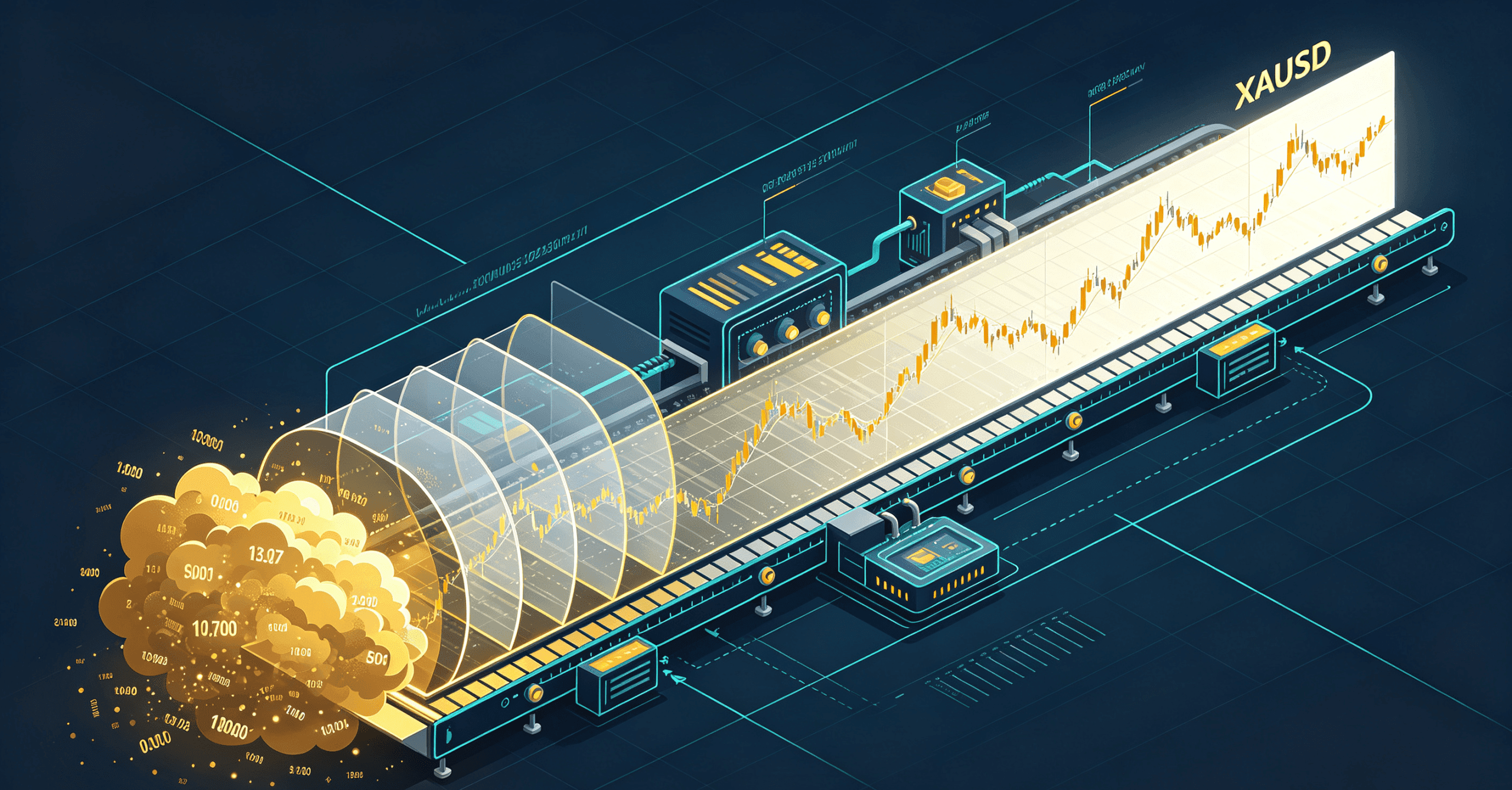
Learn how to clean historical XAUUSD tick data with Python, validate timestamps, remove duplicates, detect abnormal quotes, and account for bid-ask spreads for more reliable backtesting.
Learn how quantitative traders can handle UTC timestamps, daylight saving time, and timezone differences in Forex APIs to maintain consistent tick data, candlesticks, backtesting, and live trading.
In real-time forex trading systems, subscribing to multiple currency pairs seems like a simple scalability feature. However, once deployed in production, a subtle but critical issue quickly emerges: data out-of-order delivery. Especially in
In modern trading systems, data connectivity is critical. Whether you are building a forex trading terminal, a multi-asset brokerage system, or a quantitative strategy engine, understanding the difference between an FX API and a CFD API is
Many failed backtests are not caused by the strategy itself, but by the fact that the data layer is already biased from the beginning. In cryptocurrency markets, this problem becomes even more pronounced: prices move 24/7, liquidity shifts
A
By AllTick
· 4 min read
Showing 1–15 of 184
Start streaming market data today
Generate a free API key in seconds and connect to every market from one endpoint.